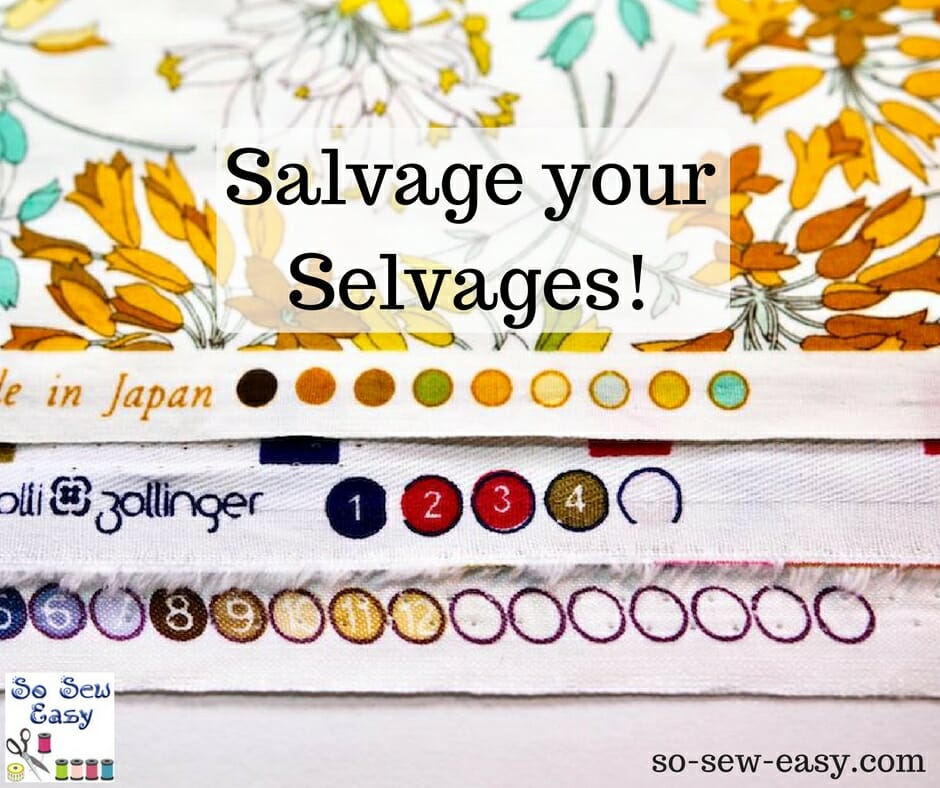
Now any seamstress or hobby sewist will undoubtedly have discarded that little white strip along the fabric edge without a second thought, probably a few hundred times or more. You know that “useless” strip where the manufacturer’s branding is printed…along with a few strange colored circles? Well, there’s more to it than just branding! That printing along the fabric edge is known as the fabric selvage marking and, together with keeping the fabric from fraying or unraveling, it actually contains more useful info than you’d previously imagined.
What’s in a name?
Before you learn the secrets of the strip: how about that weird name?! Well, the name selvage or selvedge originated from the term self-edge, meaning a self-finished edge of the fabric. You will find that the specific weave in the selvage strip stops it from fraying entirely. It is “self-edged”.

The colored circles (or whatever other shape the manufacturer uses) contained in the selvage strip offer a wealth of guidance when it comes to color matching of fabrics for a larger project and, when placed alongside each other, the selvage markings of two different fabrics can tell you whether or not the fabrics really match, color-wise.
For example…should you be looking for a solid color match for a complex and colorful print, the selvage dots will allow you to tell whether or not your eyes are deceiving you as we often lose perspective of individual tones when a print is complex and color-rich. When dealing with two complex prints, matching more than two of the circles in each fabric up should tell you whether or not the fabrics will complement each other.

What’s even more exciting about the selvage strip is this: once you’ve used it to help you pick out colors for your project…save it! There is actually what I can only call a movement of sentimental sewists, quilters in particular, out there who religiously save their selvage strips. You’ll be inspired and utterly amazed once you’ve had a look at what some of these artists have done with their collections!
Plus, it’s not only because the sturdy, un-fraying weave makes for great pincushions, pencil pouches, and seat-covers, it’s also because there, on whatever you chose to construct out of your saved up selvage strips, stands a history of the brands you’ve used and your choices and experience of every project you’ve undertaken since you started selvage-saving! In the end, you can produce an item that’s bright and detailed, a color-coded history book telling the tale of all your hard work in front of the machine! One thing’s for sure: undertaking a selvage project of your own is bound to be a rewarding and sentimental experience!

The wide variety of fonts, colors, and patterns used in different selvage strips make for incredible detail and what’s more…no one’s item, even if they use your selvage pattern, will look remotely the same.
When sewing together strips for your project, consider this: the cut edge of the selvage won’t fray…instead, it may well create ribbons of the most adorable fluff, adding even more texture and detail to your piece. Keep about an inch of the actual fabric attached to your strip (to play around with) when you trim it off the main fabric. Use topstitching to sew your strips together: just within the finished edge.
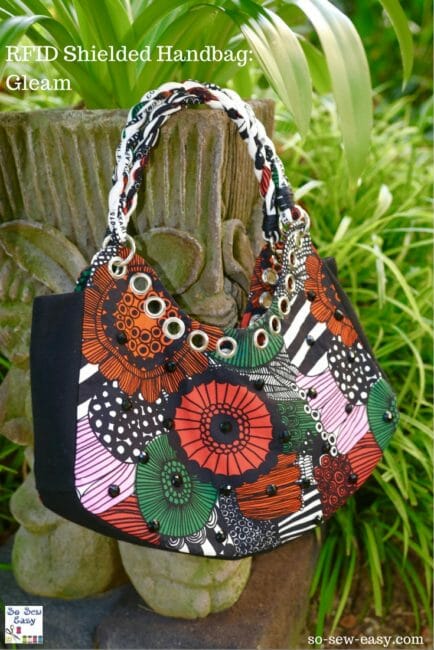
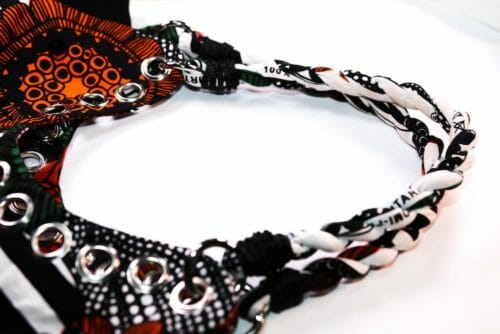
You may not have noticed it in the project pictures, but I made the handles of the Gleam, RFID Shielded Handbag from the selvages of the Marimekko fabric I used for the bag. If you look closely, you’ll see the markings. I used the technique detailed in the tutorial and video about Making Bag Handles from Twisted Fabric Scraps to make the handles.
Not only were these handles very strong because of the more robust nature of the selvages, but the subtle display of a brand like Marimekko was fantastic. So many people have asked me about it and assumed the bag was a designer item. And all this with something sewists would often just throw away!
So Salvage your Selvages!
I’m pretty sure this has given you a little bit to think about, a little colored, printed strip to think about…happy sewing and happy selvage salvaging!
What sort of things have you made using selvages? Please share your ideas with us in the comments below.
If You’d Like To Support Our Site
If you want to help us continue to bring you a wide selection of free sewing patterns and projects, please consider buying us a coffee. We’d really, really appreciate it.

I have saved selvedges for years. I use them for drawstring bags, wrapping gifts, gift tags, hang tags. You can also use them to make quirky design elements. I love the idea of the twisted handles.
I also think the color dots tell you what color was the main color (1) to the least color used was (10) or the last color dot.
en mi pais,Argentina se desecha el orillo ,selvage,y no vienen con los datos de color, nombre de la tela etc.yo aprendi a guardarlos para hacer trabajos, cuando descubri el patchwork. ahora los atesoro y ya hice monederos,fundas carteras etc. es hermoso crear una nuev atela con los orillos.gracias por tu post.rosa
I heard a speaker who was a rep for a fabric company. This is what I learned from him:
The colored circles show all the colors in a fabric. But if you see circles that are empty or blank, it means that the fabric you are looking at is a cheaper version of the original. For example, a big box store may have the same printed fabric as a good quilt shop, but they will have the cheaper version that used fewer colors. I never knew this. So if you buy the same print from a big box store, you are not getting the same quality. Imagine my surprise when I was in Williamsburg, at one of the shops in Colonial Williamsburg, and saw fabric that had two blank circles on the selvage. It was being sold for $17/yd., and apparently it was not the best quality.
Thank you so much for this post!!!! I get so frustrated when people call the selvage salvage. You made the name clear and provided a good way to remember which it is…self edge…… I also appreciate the idea for a strap of selvage and some of the other ideas in this post. I can imagine making some tote bag handles with the selvages of the fabric.
Indeed, that would be a great pair of handles.
I have used the salvages like a twill tape to stabile shoulders and on knit fabric hems to stabile as well
Great ideas!!!
I made a quilt pieced pillow for a librarian friend that looks like books on a shelf. I used some of the selvedge titles that looked like good book titles and sewed them onto the spines of the books.
I would love to see a picture! Got Instagram?
I’d love to share, but I’m not on any social media. I love your site!
It seems like it the coming trend not to be on social media, you can send me your photo and I will give you credit on the site. I just would like for people to see what is possible…
I have no fabric with coloured dots on it my sell edges are all plain???
I think this is more common on quilting cotton, but I may be wrong.
I save the selvedges to crochet a throw rug, they seem to never wear out
Great idea! Now that is something I would make and worth saving the selvages for!
I am new to sewing. I did wonder what the colour code was for. Thank you for clarification.
I have a big bag of selvages which I have been collecting for years. I came across a book in which the author made a selvage quilt. The selvages were cut with an inch and a half or so of the fabric print included with each strip. The selvage strips were then sewn onto squares of light muslin fabric in whatever direction you decide. Once the quilt blocks are built, stitch together and complete the quilt as usual. I saw one at a quilt show some years ago and it was very unique!
Do you know the title for the book that had selvage projects?
I use the selvedges to strengthen cotton fabric when making bag straps. Sew the fabric together, turn rightside out, put the selvedge inbetween the layers and quilt it together.
They also make a good cloth tapes for historical garments too (but only for undergarments or items that aren’t seen in public).
I’ve been sewing for 66 yrs since I made clothes for my baby dolls @7 and remember a time before perma-press and polyester blends. We cut the selveges off of all cotton fabric as a matter of course because you never knew if the selvage would shrink or not at the same rate as the fabric. I’m sure you’ve all had a towel shrink along the tightly woven strip across the end of the towel making it ,while still usable, hard to fold. ( And not the ones you put out for guests) Imagine a dress or blouse (girls didn’t wear slacks, lol) shrinking in one spot or another. My mom would make a deal with me she would buy me fabric for a new dress then buy enough for her and I and I had to make both dresses. Taking the required sewing in home ec. was torture because I was so much more advanced than my classmates and my teachers thought I was showing off. By the way, fabric was $.50 yd. I am one generation from using flour sacks like my mother. She would be 101 yrs next month Bless her Soul.
Thank you for your article and all the great comments! I just started sewing wovens, have noticed the beautiful selvedges and will use some for accents on clothing.
I think this is excellent information. I never knew about the markings on selvages, and your tips are great. I am a new sewer, and I am starting at the age of 78. Sewing is a lot of fun, but I have much to learn. I started with face masks (what else in 2020?) and have progressed to aprons. I made aprons for my son and son-in-law for Christmas as they do most of the cooking. Both of them were so happy with their new aprons that they asked me to make them more. Thanks again for your tips.
Kathleen, well done. Never too late. I started 50 years ago and never stopped. Joan in Australia
I use the trimmed edges as a stash for fabric face mask ties, either without or with sewing them into ties that are perfect for slipping on pony beads for adjustable ear loops.
Salvages are wonderful for beginning watercolor students. I sew so I knew about the color circles. I have my students buy 1/2 yards of fabric of any color combination they like. I have them make a value chart to compare various colors in the fabric. Next they learn to mix colors. finally they make a drawing using the colors in the salvage to make a painting where all the colors work together. Nobody ever has colors that won’t work together.
I used a selvedge of a cloche hat material (upholstery) to make a flat flower which I sewed onto a black swirled flower and used the same black fabric to make a hat band for the cloche. I had never used the selvedge for any thing before.
@Elayne – that sounds interesting – do you have a picture?
The markings on the selvedge are called “registration marks” and they are used to verify that the colors are properly aligned during printing. Each dot or mark represents a colored screen so sometimes you see numbers with the registration marks.
So while they are fun for quilters to use in projects and for matching the registration marks have a legitimate purpose during the printing process.
The part of the selvedge without printing makes great stay tape for tote bags and other sewing projects.
I love the bag and using the selvedges in the handles is a great idea, those handles will never stretch out of shape.
I’ve collected selvedges for years, they are so much fun to use in projects.
I wind the selvedges into balls and have them in a basket on a shelf in my sewing room. I enjoy seeing them plus they inspire me to make something!
It was good to see that someone explained the true use for the coloured circles on the selvedge.
I, myself am a Printer’s wife and so Registration marks of whatever kind were explained to me many years ago.
I have been sewing for decades and I learned something new today! Thank you. Never even thought about the dots on the selvage.
I use my saved selvedges to be used as ribbon for wrapping gifts.
I loved all of the comments. I too have saved selvedges for years. Then I learned that an acquaintance used them to make doll clothes. So every time I know I am going to see her I take her a bag. I have a plethora of them!!!
That’s great! If you ever feel the need to give more away, let me know! I am collecting them for a quilt I want to make, and am also considering putting enough together to reupholster two chir seat and back cushions!!
Amy
That is ambitious 😃
Could ou sew them all together and use them to knit of crochet a floor rug?
Yes, I think so.
Thanks for sharing this amazing post. I got the most important information from here.
After all these 60 years of sewing, I could have had some really cool projects from all those selvages! Reckon I better cut me some strips from now on and make some cool projects!
I would live to see what you come up with:)
A big thank you from me, too! I had no idea.
Just one of the reasons I stay with so-sew-easy.com!
You are so sweet 🙂
After reading this article, I will be salvaging my salvage.
Great idea! Cecilia
Very happy reading your comment!
I’ve always used the selvages to test for colour-fastness and how the colours will do in the wash/ in the sun.
Thanks to that, I’ve prevented some expensive mistakes and determined which materials are handwash only vs which ones can handle the washing machine. When sewing for kids, nobody I know has the time or energy to handwash play clothes.
My Mum has sewn them together and then made bath & toilet mats. The ideas are as big as your imagination. Happy sewing everyone.
Great article. I’ve known about the registration, and used them always when coordinating fabrics. Never thought to save the selvage though. When you made your handle on the Gleam bag did you use the selvage as just one half of the tube or both sides of the tube? Did you use the 2″ strip as in the instructions for Twisted Handles?
Use salvage on ends of zippers when making bags to give more strength. A great replacement for twill tape.
Just a tip – wash all your fabrics, or at least all your selvages, before using. As mentioned by a few others, selvages shrink – some more, some less, than their main fabric. If you sew several together in a project, things could get a bit messy after washing if not preshrunk.
I have saved the salvage edge from swimwear for years. There are so many uses for them, its just incredible!
Smaller fabric pcs that I am using are rolled and tied with a scrap of swimwear salvage before going on a shelf
Recently,packed my sister’s sewing business and moved across country.
The swimwear salvage strips were used to tie items in place and secure to side walks of the rental truck. These strips work better than nylon cable ties! My brother was amazed and I explained that my sis and I have used these multi purpose swimwear salvage ties over and over for many years…lol
I have a slightly different question. Why are we supposed to cut the selvedge off the fabric in the first place? It seems to me particularly strange to cut off a finished edge and then later finish the seam. I know there are many times when you aren’t cutting a straight line that you will lose that edge anyway. It also makes sense when you’re quilting with a 1/4″ seam since it would show.
When I make a dress or skirt with a zipper down the back in a straight line, I always use the selvedge as the edge where I put the zipper. It makes a much sturdier edge especially on children’s clothes where they sometimes yank at the zipper.
As another example, I’m making flannel crib sheets now for the newest member of our family. Leaving the selvedge on as the edge along the long side of the fitted sheet means I only have to hem it at the top and bottom. I also gain an inch or so of extra width which helps anchor the sheet when the child wiggles around.
My high school Home Ec teacher was too horrified by the concept of leaving it on to be able to explain it to me other than to say that’s what you have to do. I’ve been trying to figure it out ever since. Anybody have an explanation?
Not an expert, but I thought it was because it draped and stretched less than the rest of the fabric, so, depending on where it was used, it might effect the way it hung.
Hello Linda,
All selvedges shrink a little in the wash… some of them shrink a lot! In some sewing projects this could present a problem.
Selvedges shrink differently from the rest of the fabric. This can cause small pieces to warp out of control. Sometimes they iron out flat; sometimes not. Who wants to keep ironing them?
Use them to tie newspapers or your quilt magazines together, wrap packages, tie up your tomatoes, keep boxes shut, hang wreaths, most any thing.
This from a former home ec teacher. Long ago!
Selvage is a slightly tighter weave than the fabric and can shrink more causing puckering. So it’s fine to leave it on in certain circumstances as you mentioned, but not for straight seaming. I prewash all cottons and that will show you very quickly whether the selvage causes puckering. Then you know whether or not you can leave it on.
Selvages are also great to use as a stay tape. While reading your very informative article I thought “I should have saved them with, with a substantial border of fabric, from various clothing, crafting, gift sewing projects for future reference and precious memories.”
Ive been using them for years. Ive made pot holders, needle holders, front of purse, and many quilts. Like everything else you get addicted to the and friends all give them to you. For quilts you sew the on a foundation on the diagonal FUN
The colored circles are for quality control. To check the “registration” and individual colors of the print before and during production.
You are so right, I learned that tip in graphic arts.
This was very interesting. I didn’t know what all the information meant but yesterday I cut off the selvage to try finding more of a particular fabric. But I will definitely be using them for other use now. Thank you, good article.
Wendy
Wow- when I think about the lovely selvages I have thrown away! 🙁
I keep all useable scraps too- but never thought of saving these. Genius!
Please give more info regarding the purpose of the colored circles. I’m thoroughly confused as to their purpose.
It’s a color register. Most all products that have been printed have it. It shows what colors have been used or mixed . Use it to find coordinating colors for your project.
Cool info! I’m going to start
a banner with the strips sewed
onto a strip to hang on the wall.
Carla from Utah
I have some polished cotton with the print right up to the edge..no selvage with info. Is that an indication of it s age?
Not necessarily, some companies do it like that specially ponti di roma fabrics.