


Every few weeks somebody emails me the same question, always slightly embarrassed, as though it were a silly thing to ask. It is not. The question is this: what is canvas, and is duck cloth the same thing or something different? If you have stood at a cutting counter with two bolts labelled “canvas” and “duck” that feel identical in the hand, you know why it comes up. Let me untangle canvas and duck cloth properly, then show you how to sew both without wrecking your machine.
What Is Canvas And Duck Cloth
Canvas is the broad family name. The Museum of Fine Arts Boston defines it in its conservation glossary as a heavy, strong, plain weave fabric made from cotton, hemp or linen, and that is all the word promises. Heavy. Strong. Plain weave. Nothing about fibre, weight or finish. A painter’s stretched linen and a stiff cotton tote fabric are both canvas.
Duck is a member of that family. It is a specific kind of canvas, woven more tightly and more densely than the average, and in modern shops it is nearly always cotton or a cotton blend. So the honest short answer is that all duck is canvas, but not all canvas is duck.

Canvas Vs Duck Cloth: What Actually Differs
The real difference sits in the warp. In ordinary plain weave, one warp thread crosses over and under one weft thread. Duck is built differently. The MFA Boston glossary describes it as woven with plied yarns, or with double threads in the warp: two yarns side by side where ordinary cloth has one. That doubling gives duck its density, its stiffness and its reputation for not tearing.
Here is what that means at the cutting table:
- Duck is tighter. Hold it to a window and you will see far less light through duck than through a general purpose canvas of the same weight.
- Duck is smoother and flatter. The doubled warp packs the surface down, so duck takes a screen print and a hem crease better.
- Canvas is the wider term. Artist, awning, hemp, linen and cotton duck all live under it.
- In the shop, the labels blur. Most fabric stores in the United States use the two words interchangeably, and a bolt marked “10 oz canvas” is very often numbered duck.
That last point saves a lot of frustration. Unless you are buying from a technical supplier, do not chase the word on the label. Chase the weight and the hand. That tells you far more about how a cloth will sew.
Where The Names Come From
Both names are old and both are literal. Merriam-Webster traces canvas back through Middle English canevas and Anglo-French to the Latin word cannabis, meaning hemp, with the word in English use by the thirteenth century. Canvas was originally hemp cloth, and only became a cotton word much later.
Duck comes to English from the Dutch doek, plain cloth, which is what Dutch sailmakers called the heavy linen they worked with. The MFA Boston entry adds a second, folk explanation that the cloth earned the name because it sheds water. Both stories are told. The Dutch one is the one linguists back.
A Brief History Of Canvas And Duck Cloth
For most of its life this cloth was working equipment, not dress fabric. Hemp and linen canvas made sails, tents, wagon covers and mailbags. When cotton became cheap in the nineteenth century, cotton duck took those jobs over, and American mills built whole towns around weaving it.

Military demand is what standardised it. Armies buying duck by the mile needed a specification every mill would read the same way, which is how the numbered system we still use was formally written down in the 1920s. From there duck moved into workwear, shop aprons and chore coats, and eventually into the tote bag every one of us now owns. That working history is exactly why it behaves as it does under the needle.
How Canvas And Duck Cloth Are Made
The weave itself is the simplest there is. Over one, under one, all the way across. What makes canvas canvas is not the pattern but the yarn: thick, hard twisted, and beaten up tight so almost no air is left in the cloth.

The Numbered Duck Weight System
This is the part that trips everybody up, and it is the single most useful thing to know when buying. Numbered duck runs from about #1 down to #12, and the lower the number, the heavier the cloth. Number 1 duck stands up on its own. Number 12 is soft enough for an apron.
It looks backwards until you see the arithmetic behind it. The 1924 National Bureau of Standards paper that established the American specification sets out the rule plainly: the number of the duck equals 19 minus the weight in ounces of one linear yard at 22 inches wide. So a cloth weighing 9 ounces per linear yard is 19 minus 9, which is number 10 duck. Heavier cloth, bigger subtraction, smaller number. Once you see it as a subtraction it stops feeling arbitrary.
Most of us buy by ounces per square yard now, so here is the same information in the units you will actually see on a bolt end, with what each weight is good for.
| Duck number | Roughly, oz per square yard | What to make with it | Home machine? |
|---|---|---|---|
| #12 | about 11.5 oz | Aprons, light totes, pillow covers, banners, bag linings | Yes, easily |
| #10 | about 14.7 oz | The all rounder: totes, project bags, cushion covers, shop aprons | Yes, with a denim needle |
| #8 | about 18 oz | Heavy totes, slipcovers, outdoor cushions, tool rolls | Yes, but reduce bulk carefully |
| #6 | about 21 oz | Upholstery, heavy work bags, floor cushions | Single layers only, expect a fight |
| #4 | about 24.5 oz | Floorcloths, industrial covers, hammocks | Not really |
| #1 | about 29.5 oz | Heaviest industrial cloth | No |
If you take one thing away, take this: number 10 duck is the sweet spot for home sewing. It has enough body for a bag that stands up, it holds a crisp fold, and a decent domestic machine will sew it all day. Number 12 if you want something softer and more drapey. Number 8 if you need real structure and are willing to work for it.
Cotton, Cotton Poly Blends And Waxed Canvas
Three versions turn up regularly, and they behave quite differently.
- All cotton. Takes dye beautifully, softens with washing, presses like a dream, and shrinks. Prewash it. It also wrinkles and it will mildew if you store it damp.
- Cotton poly blend. Sold for outdoor and marine use. Barely shrinks, resists mildew and fading, takes a crease unwillingly. Ideal for outdoor cushions.
- Waxed canvas. Cotton duck impregnated with paraffin or oil wax. Water beads off it, it develops a marked patina where it creases, and it cannot go anywhere near an iron or a washing machine.

Waxed canvas is lovely to own and awkward to sew. It drags on the machine bed, holds every pin hole permanently, and gums up your needle. Clip instead of pinning, fit a walking foot, and wipe the needle now and then. Buy waxed canvas by the yard in a small cut the first time.
How To Care For Canvas And Duck Cloth
Care depends almost entirely on which of those three you bought.
- Prewash all cotton duck twice. Once is not enough. Cotton duck can lose 5 to 10 percent, and a tote that shrinks after you have topstitched it is a sad object. Hot wash, hot dry, then do it again.
- Do not prewash if you want stiffness. New duck carries sizing that gives it that board like body. For a structured bag that will never be washed, leave it in.
- Wash finished items cool and inside out. Repeated hot washing fades printed duck quickly.
- Iron hot, with steam, from the wrong side. A dry iron will never persuade a duck hem to lie down.
- Waxed canvas: sponge only. Cold water, no soap, no machine, no iron, no dryer. Rewax every couple of years with a fabric wax bar.
- Store it dry. Duck rolled up damp will mildew, and those stains never come out.
Best Sewing Projects Using Canvas And Duck Cloth
Canvas rewards projects that need to hold a shape and take a beating. It punishes projects that need drape. Keep to the first list and you will love it.
- Totes and market bags. The classic. Number 10 duck makes a bag that stands open on the counter while you load it. My Small Canvas Tote Bag pattern is the one I hand to people who have never sewn canvas before, because it is small enough that no seam gets truly thick.
- Aprons. Number 12 duck for comfort, number 10 for pockets that hold heavy tools without sagging. Plenty of shapes in our free apron sewing patterns collection.
- Slipcovers. Number 8 duck washes well and takes the tucking and pinning that slipcovers demand. Prewash twice.
- Outdoor cushions. Use a cotton poly outdoor duck here, not all cotton. Sunlight and damp will destroy pure cotton in a season.
- Storage baskets and tool rolls. Anything that must stand up by itself.

What canvas is bad at is gathers, drape, and lots of small curved seams. A gathered canvas skirt is a miserable garment. For body with movement, look at a mid weight cotton such as slub cotton instead.

Tips For Sewing With Canvas And Duck Cloth
None of this is difficult. It is just different from sewing quilting cotton, and the mistakes people make are always the same five or six.
Tip 1: Put In A Proper Denim Needle
A universal 80/12 will skip stitches and then snap. Use a denim or jeans needle: 90/14 for number 12 duck, 100/16 for number 10, 110/18 for number 8 and up. The denim point is sharper and the shaft stiffer, so it drives through hard woven cloth instead of deflecting. Change it every project, because canvas blunts needles fast and a blunt needle causes most skipped stitches. Keep a mixed pack of denim sewing machine needles in the drawer, and see our guide to which sewing machine needle to use.
Tip 2: Move Up To A Heavier Thread
All purpose thread looks thin and mean on canvas, and it is not strong enough for bag handles. Use a heavy duty or upholstery polyester on top. If your machine complains, a good compromise is heavy duty thread in the needle and ordinary all purpose thread in the bobbin. Lengthen the stitch to 3.0 or 3.5 mm while you are at it. Short stitches on heavy cloth perforate it like a stamp edge and look wrong.
Tip 3: Fit A Walking Foot
This is the single biggest improvement you can make. A standard foot pushes the top layer forward while the feed dogs pull the bottom, and on stiff canvas that shows up as a bag panel half an inch longer on one side by the end of the seam. A walking foot feeds both layers together. I use mine for canvas far more than for quilting.
Tip 4: Reduce Bulk Rather Than Fighting It
This is the mindset shift that makes canvas easy. When four layers of number 8 duck meet at a corner, the answer is not more power, it is fewer layers. Grade your seam allowances so no two match. Trim corners hard. Where a side seam meets a bottom seam, press the allowances in opposite directions so they nest instead of stacking. On heavy duck, a bound seam beats a folded one every time.
Tip 5: Hammer Your Seams Flat
Yes, an actual hammer. Lay the seam on a hard surface, cover it with a scrap so you do not mark the cloth, and give it a dozen firm taps. That crushes the fibres and takes four layers of duck from impossible to routine. A tailor’s clapper does the same job more elegantly. Follow with a hot steam iron and the seam stays down.
Tip 6: Use A Hump Jumper At Thick Seams
When the foot climbs onto a thick seam it tips forward, the feed dogs lose contact, and the machine stalls or chews a knot. A hump jumper is a small stepped shim you slide under the back of the foot to keep it level. They cost almost nothing and solve the problem completely. A folded scrap of the same canvas works too. And clip rather than pin, because pins bend in duck and leave permanent holes in waxed canvas.
Tip 7: Know What Your Machine Can And Cannot Do
An ordinary domestic machine handles two layers of number 10 duck comfortably, four at a pinch with the right needle and a slow hand on the wheel. It will not handle six layers of number 8, and forcing it will not change that. The limit is the presser foot lift height and the needle bar, not the motor. When you hit that wall, redesign the seam, walk the wheel by hand over the thick spot, or hand sew that inch with a thimble. Never run the machine at speed into a wall of cloth. That is how needles break and timing goes out.
Test every setting on a folded scrap before you touch the real thing. Two minutes of testing has saved me more projects than any other habit. And the next time you stand at the counter with two bolts that feel the same, you will know what you are looking at. Canvas is the family, duck is the tightly woven cousin with the doubled warp, the numbering runs backwards on purpose, and number 10 is the one that will make you happy. Buy a yard, fit a fresh denim needle, and make yourself a tote.
Canvas And Duck Cloth Projects Roundup
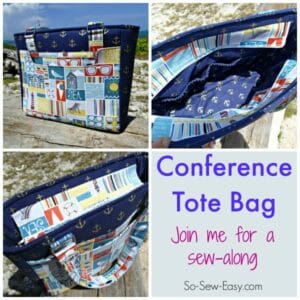
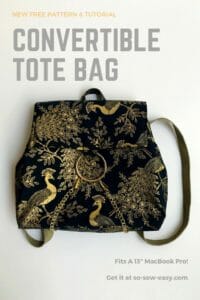
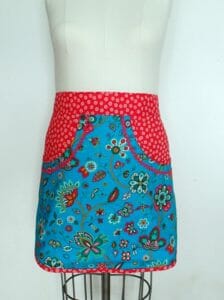
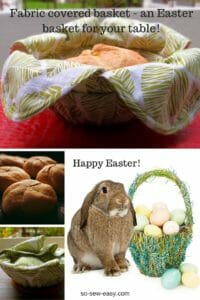
Sixteen So Sew Easy projects that all work beautifully in canvas or duck. Hover over the picture to show the title, click to open, or right-click and open in a new tab to keep this page open too. And do not forget to pin it.






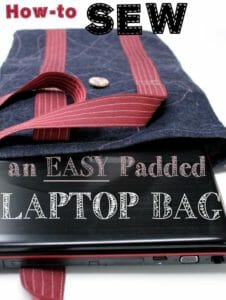
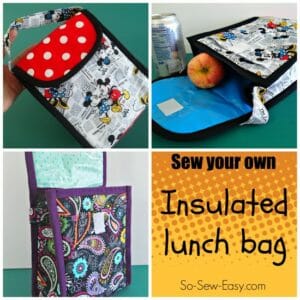
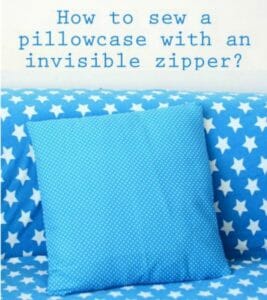
For more, the full tote bag pattern roundup and the apron pattern roundup are both worth an afternoon, and our whole free sewing patterns library is free to download.
Some links above are Amazon affiliate links. As an Amazon Associate, So Sew Easy earns from qualifying purchases at no cost to you.
Thanks so much for your comment!
It would be great if you could share this post with your friends!