


There is a fabric in nearly every wardrobe that most of us have handled a hundred times without ever learning its name. It is in the good trousers, the work blazer, the raincoat by the back door. So what is gabardine, exactly? It is a tightly woven twill with a steep diagonal ridge on the face and a smooth, quiet back, and it has held up tailored clothing for well over a century. It sews beautifully once you understand it, and it punishes a careless iron.
What Is Gabardine
Gabardine is a warp faced twill, and everything else about the cloth follows from that. In a twill the interlacings step over by one thread on each pass, producing a diagonal line instead of the flat checkerboard of a plain weave. Gabardine pushes the idea hard: the warp is packed far more densely than the weft, the weave is beaten up tightly, and the resulting diagonal, called the wale, runs at a steep angle rather than a lazy 45 degrees.
Because the warp dominates so completely, the weft is buried. As Britannica notes in its entry on the cloth, the filling lies entirely at the back and is therefore not visible from the front. That is why gabardine looks like two different fabrics depending on which side you are holding: a firm, crisply ribbed face, and a plain, almost featureless back. The Textile Research Centre in Leiden puts the same point in weaving terms, noting that gabardine carries more warp than weft threads on the face of the cloth.

Gabardine Vs Twill, Serge, Denim And Chino
This is where online listings get sloppy, so it is worth being clear. Every gabardine is a twill. Not every twill is a gabardine.
- Twill is the family name for any weave that makes a diagonal. It tells you nothing about weight or density.
- Serge is a twill with a much more even balance of warp and weft, so the diagonal shows on both sides and the angle is shallower. Serge is softer and it drapes more.
- Denim is a cotton twill with a coloured warp and undyed weft, designed to fade and soften, which is the opposite of what gabardine is for.
- Chino and drill are cotton twills with lower warp density and a matte, sportier surface.
- Gabardine is the tightest and steepest of the group: firm hand, clean face, plain back, very little give.
If you are not sure what you have, look at the back. Strong diagonal on the face, almost invisible on the reverse, and you are holding gabardine.
Where The Name Comes From
The word is older than the cloth. A gaberdine was a long, loose outer garment, a pilgrim’s cloak or a labourer’s smock, borrowed into English from Spanish and Old French in the sixteenth century. Shakespeare uses it in The Tempest, where Trinculo crawls under Caliban’s gaberdine to shelter from a storm. Three hundred years later a Hampshire draper needed a name for a new weatherproof cloth, and took the old word for the old raincoat.
A Brief History Of Gabardine
That draper was Thomas Burberry, who had opened his shop in Basingstoke in 1856. Watching local shepherds work in smocks that had been rubbed with lanolin, he wondered whether the greasing could be done to the yarn instead of the finished cloth. According to the Imperial War Museums account of the trench coat, Burberry developed his water repellent gabardine in 1879 for use in outerwear. The Smithsonian describes the trick precisely: he proofed the individual strands of cotton or wool rather than the whole fabric, which meant the finished cloth shed rain but still let air through. Rubberised mackintoshes of the day did neither. The patent followed later, and the Textile Research Centre dates the registration of the fabric to 1888.

Breathable weatherproofing was a genuinely new thing, and it went where wool and rubber could not. The Smithsonian notes that gabardine outerwear became the choice of aviators, explorers and adventurers long before it was a fashion item. Then came the First World War, and the officer’s weatherproof coat with its storm flap, epaulettes and D rings became the garment we now call a trench coat. If you want the whole story of how a piece of military kit turned into a wardrobe classic, I have written it up in the history of the trench coat and the sewing project it inspired, and gabardine is the fabric at the centre of it.
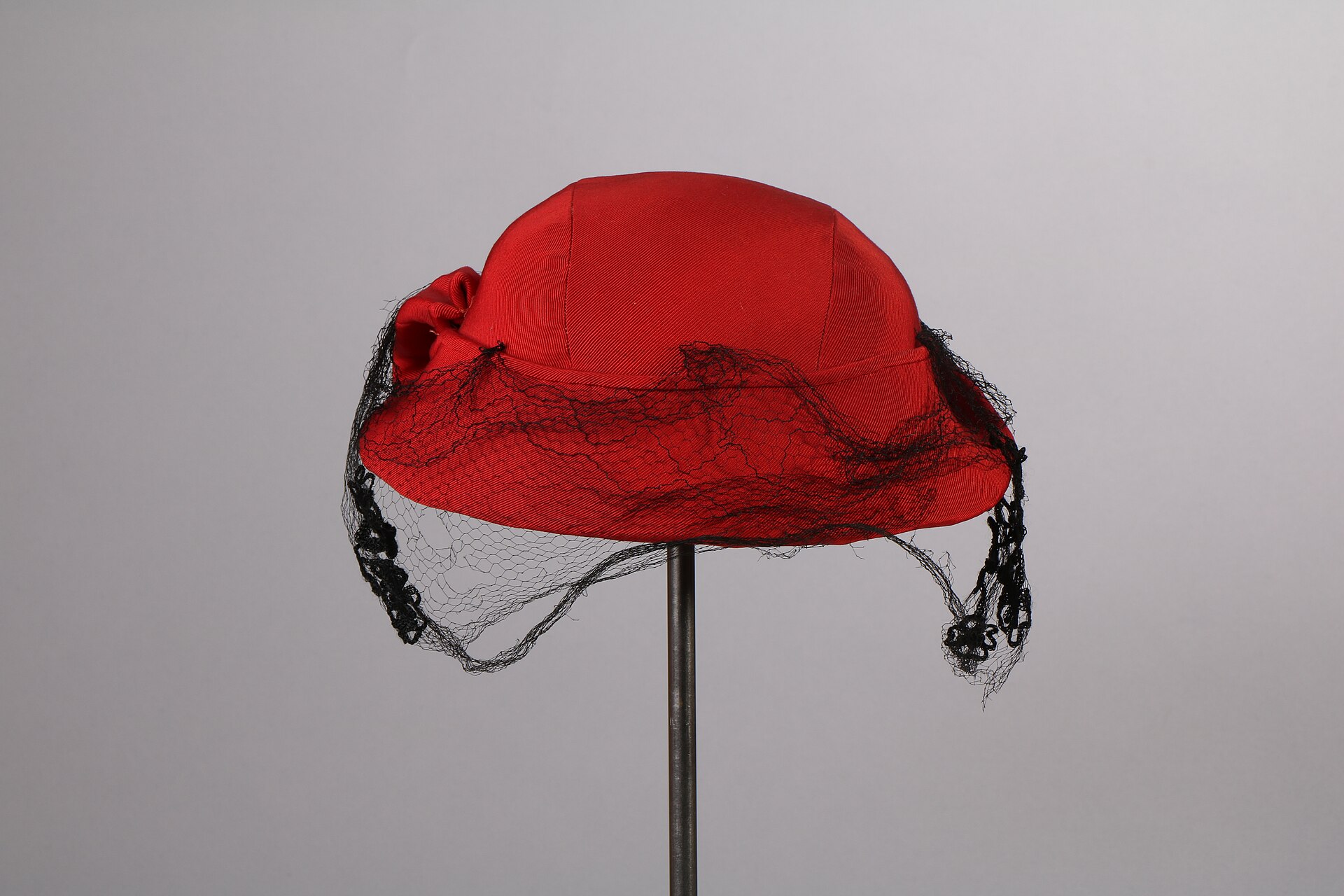
By the 1920s gabardine had escaped the coat entirely, turning up in day dresses, suits and millinery, and becoming the default cloth for uniforms of every kind because it held a press, resisted a shower and refused to look shabby.
How Gabardine Is Made
Three things make a gabardine: a fine, hard twisted warp yarn, a very high warp count, and a steep twill on the loom. Spin the warp too softly and the wale goes fuzzy. Set it too loosely and you have serge. Get all three right and you get that dry, firm cloth with a ridge you can feel with a fingernail.
The name describes the weave, not the fibre, and that is the most useful thing to remember when you are buying. Three quite different fabrics all get sold as gabardine, and they behave nothing like each other.
Wool Gabardine
The original, usually spun from worsted wool. Firm but springy, with a faint give on the bias, and it moulds under steam in a way no synthetic can match. You can shrink out sleeve cap ease or press a curve into a trouser leg and it stays. It is the most expensive of the three, it frays moderately, and it shines faster than you expect if a bare iron touches the right side.
Polyester And Poly Rayon Gabardine
This is what most of us find on the bolt at a chain fabric store, often labelled poly rayon suiting or stretch gabardine. Stable, cheap, wrinkle resistant, softer in the drape than wool, and completely unwilling to be shaped with heat, so every curve has to be built with darts and seams rather than the iron. It frays badly, holds static, and a hot iron will glaze or melt it in seconds. Test on a scrap. Every single time.

Cotton Gabardine
Crisp, matte, heavier and with almost no give. It takes a hot iron and all the steam you can throw at it, which makes pressed creases a joy. The flip side is that it also creases where you do not want it, across the lap of a skirt and behind the knee of a trouser. It is the right choice for a trench coat, a structured skirt or a workwear jacket.
Why Gabardine Sheds Water Without A Coating
People assume there must be a film on it. There does not have to be, because the water resistance is structural. Pack that many fine warp ends into an inch of cloth, beat the weft hard against them, and the gaps between yarns become very small. Wet the surface and the yarns swell, closing those gaps further. Surface tension does the rest, and the drop rolls off the wale.
Wool adds its own help, because the scales on the fibre and its residual grease shrug water off. Burberry’s contribution was to lanolise the yarn before it ever reached the loom, and the Textile Research Centre records exactly that, describing gabardine as made waterproof with lanolin applied to the threads before the weaving process. Air still passes between the yarns, so the cloth breathes.
Be honest about the limits, though. Gabardine is water resistant, not waterproof. Stand in a downpour and it will eventually wet through, and any modern water repellent finish on a shop bolt will wash out over time. Sew a trench coat from it and you have a coat for a wet walk to the car, not a day on a hillside.
How To Care For Gabardine
- Wool gabardine. Dry clean, or hand wash cool with a wool detergent if you have preshrunk it and you know what you are doing. Never the tumble dryer. Dry flat or on a shaped hanger, and read up on the proper care of wool clothing before you commit an expensive length of cloth.
- Poly and poly rayon gabardine. Machine wash warm, tumble low or hang to dry, and iron on a synthetic setting only. Heat is the enemy here, not water.
- Cotton gabardine. Prewash before cutting and expect real shrinkage, sometimes five per cent. After that it launders like any good cotton and presses at a high temperature.
- Storage. Hang trousers from the hem so gravity keeps the creases sharp, and keep cedar or lavender near anything woollen.
Best Sewing Projects Using Gabardine
Gabardine wants structure. It is wasted on anything gathered or floaty, and it rewards clean lines, pressed edges and crisp topstitching.
- Tailored trousers. The classic use. Because gabardine barely gives, fit matters more than usual, so work through my pants fitting techniques on a muslin first.
- Blazers and unlined jackets. Wool gabardine shapes over a tailor’s ham beautifully. Choose your interfacing carefully using this guide to the different types of interfacing.
- Structured skirts. A pencil skirt is the ideal first gabardine project, and my easy lined pencil skirt tutorial walks you through every step, lining included.
- Trench coats and rain jackets. The garment the cloth was invented for.
- Uniforms and workwear. Anything that has to survive daily laundering.
- Structured bags. Cotton gabardine holds a boxed corner without any interfacing at all.
Tips For Sewing With Gabardine
Tip 1: Preshrink Before You Cut
Cotton gabardine can lose a solid five per cent in the first wash. Wool needs a London shrink: lay it between damp sheets overnight, or steam it with the iron held just above the surface and let it dry flat before the scissors come out. Polyester needs nothing beyond a warm press to relax the bolt creases.
Tip 2: Cut Single Layer, All One Direction
The wale is directional and catches light, so a piece cut upside down will read as a different shade once the garment is made up. Lay out single layer with every pattern piece pointing the same way, exactly as you would with a napped fabric.
Tip 3: Sharp Needle, Right Size
A universal needle pushes threads aside. In a weave this dense you want a needle that cuts cleanly, so reach for a microtex or sharp in 80/12 for lighter poly gabardine and 90/14 for wool and cotton suiting weights. Start every project with a fresh one, and if you are unsure which to grab, this guide to choosing a sewing machine needle will sort it out. My drawer always holds a pack of microtex sharp needles.
Tip 4: Thread And Stitch Length
Good all purpose polyester thread, stitch length 2.5 for construction and 3.0 for topstitching. Lengthen it further on thick seams so the stitches do not vanish into the wale. If thread choice is a mystery, here is how to choose the correct sewing thread.
Tip 5: Finish Every Raw Edge, Because Gabardine Frays
Those hard twisted warp yarns slide out of a cut edge with alarming enthusiasm, and poly gabardine is the worst offender. Serge or zigzag everything the moment it is cut. For an unlined jacket, nothing beats the Hong Kong finish, which binds each raw edge in a strip of lightweight silk or rayon.
Tip 6: Never Press Directly On The Face
This is the one that ruins garments. The wale is a raised ridge, so an iron sole flattens the tops of those ridges and polishes them, and that shine does not come out easily. Always press from the wrong side. When you must work from the right side, use a press cloth, keep the steam moderate and the iron moving, and test on a scrap first. A wooden clapper is the secret weapon: press, lift the iron, then clamp the clapper down and let the seam cool flat under pressure.

If you do not own one yet, a tailor’s pressing cloth and a wooden clapper are the two cheapest upgrades you can make to your sewing. I go through the rest of my kit in my favourite pressing tools and how to use them.
Tip 7: Underline And Interface With Intent
Gabardine already has body, so heavy fusible interfacing turns a jacket front into cardboard. Use a light weft insertion fusible on facings and collars, and consider a sew in hair canvas for a proper tailored lapel. For skirts and trousers, an underlining of silk organza or cotton batiste stops seat bagging and gives you something to catch a blind hem into without a stitch showing on the face.
Tip 8: Rescue A Shine You Have Already Made
Do not panic. Hold a steaming iron just above the shiny patch without touching it, let the fibres swell, then brush gently with a soft clothes brush while it is still damp and let it dry untouched. On wool, a press cloth dampened with weak white vinegar and water works well. On polyester a real glaze is permanent, which is exactly why you test on a scrap.
Gabardine Sewing Roundup
Here are the So Sew Easy tutorials I lean on most whenever there is gabardine on my cutting table. Click a picture to open it, or right click and open it in a new tab to keep this page too. And do not forget to pin it.


Gabardine is not a beginner fabric, but it is not a difficult one either. It is simply honest. It shows every seam you pressed badly, and in exchange it gives you a garment that hangs properly and still looks smart after ten years. Buy a metre, make a simple skirt, and learn how it behaves under the iron before you commit to a coat.
Have you sewn with gabardine before, and did the shine catch you out the first time? Tell me in the comments which fibre you got on with best.
Some links above are Amazon affiliate links. As an Amazon Associate, So Sew Easy earns from qualifying purchases at no cost to you.
Thanks so much for your comment!
It would be great if you could share this post with your friends!